Loneliness: The Hidden Epidemic Affecting Millions Worldwide
In an era defined by constant connectivity, one would expect human beings to feel more together than ever. Yet, paradoxically, loneliness has quietly become one of the most widespread and disturbing global issues of the 21st century. It doesn’t discriminate — from bustling cities in the West to quiet villages in the East, people are reporting feelings of disconnection, isolation, and emotional emptiness at alarming rates.

Loneliness captured in a moment of quiet solitude — a visual metaphor for emotional isolation in a disconnected world
Loneliness is not just a fleeting mood. It is a deep, chronic issue with real consequences for mental, emotional, and even physical health. It affects people across all demographics — from teenagers to seniors, professionals to homemakers. And while it’s often invisible, its impact is anything but small.
What exactly is loneliness?
Contrary to popular belief, loneliness isn’t simply being alone. Some people enjoy solitude and thrive in it.
Loneliness is the painful feeling that arises when there’s a gap between the social connections you want and those you actually have.
You can feel lonely in a room full of people — or even while scrolling through hundreds of social media updates.
Why loneliness is a global crisis today
Several factors have contributed to the rise of loneliness worldwide:
1. Technological “connection” with emotional distance
Smartphones and social media have revolutionized the way we communicate that we all know for sure. But they’ve also replaced meaningful, face-to-face interaction with likes, emojis, and short messages. We’re constantly updated, but seldom deeply connected.
2. Urban life and individualism
In many countries, especially in large cities, people live in close physical proximity yet remain emotionally distant. High-rise apartments, long work hours, and a focus on personal achievement often isolate individuals from forming deep communal ties.
3. Aging populations
In places like Japan, the UK, and much of Europe, also in India populations are aging.
Many elderly individuals live alone, with little to no daily social interaction. This segment is one of the most affected by chronic loneliness.

It’s “I am today and you are tomorrow”. An old man is being given assurance by a group of youngsters
4. Post-pandemic aftershocks
The COVID-19 pandemic forced billions into isolation. While lockdowns were temporary, the emotional toll has been long-lasting. Many individuals have struggled to rebuild their social circles or confidence in socializing.
With the advent of this menacing epidemic the human era got divided into ‘pre Covid era’ and ‘post Covid era’. You find this demarcation in every lengths and breadths of society.
5. Migration and displacement
People who move for work, education, or are forced to flee due to war or climate disasters often experience extreme loneliness in new and unfamiliar environments.
The dangerous consequences of chronic loneliness
Loneliness doesn’t just feel bad — it can be deadly.
Mental health decline
Loneliness is strongly linked to depression, anxiety, stress, and even suicidal thoughts. The longer it lasts, the deeper its psychological grip.
Weakened immune system
Lonely individuals are more likely to get sick, heal slower, and even catch colds more easily, as per studies from UCLA and other institutions.
Heart disease and stroke
A landmark study from the University of York found that loneliness increases the risk of heart disease and stroke by nearly 30%.
Cognitive decline
Elderly people experiencing loneliness are more likely to suffer from Alzheimer’s and dementia.
Early mortality
According to a study published in Perspectives on Psychological Science, chronic loneliness can shorten life expectancy — with health effects comparable to obesity or smoking 15 cigarettes a day.
Real-life stories: Faces of loneliness
Maria, 68 – United Kingdom
After her husband passed away, Maria found herself alone in their house of 40 years. Her children live abroad, and days can go by without a single human interaction. “It’s not the silence that hurts,” she says. “It’s feeling like you’ve been forgotten.”
Ravi, 26 – India
Ravi moved from a small town to Bangalore for a tech job. Despite working in a bustling office and chatting with dozens online, he says he’s never felt more alone. “Everything’s virtual. Nothing feels real anymore.”
How cultures around the world are responding
Japan: Robot companions & cafés
In Japan, the government has begun exploring companion robots and even “lonely cafés” where strangers sit and talk — a cultural attempt to fight isolation, especially among seniors.
United Kingdom: Minister for loneliness
The UK made headlines in 2018 by appointing a Minister for Loneliness, recognizing it as a national issue that requires systemic solutions, including funding for community programs.
Scandinavia: Co-housing for connection
Countries like Sweden and Denmark promote co-housing where people live independently but share common areas, creating organic opportunities for social interaction.
India : Old age homes and Ashrams
In India elderly population ie 60 yrs and above forms 10.5 % of the total population as per prominent news daily reports of 2022. This may go up to 20.5% in 2050. You find a lot of old age homes springing up in every part of the country thanks to many reasons. This can be considered as the co-housing concept of Scandinavian countries.
What can you do to fight loneliness?
Whether you’re struggling with loneliness yourself or want to help someone else, these practical steps can make a meaningful difference:
1. Be the one to reach out
Don’t wait. Call a friend, visit a neighbor, or ask a colleague for coffee. Chances are, they need connection as much as you do.
2. Limit passive social media use
Scrolling through highlight reels can increase feelings of inadequacy. Instead, use digital tools for genuine interaction — video calls, shared hobbies, or group chats.
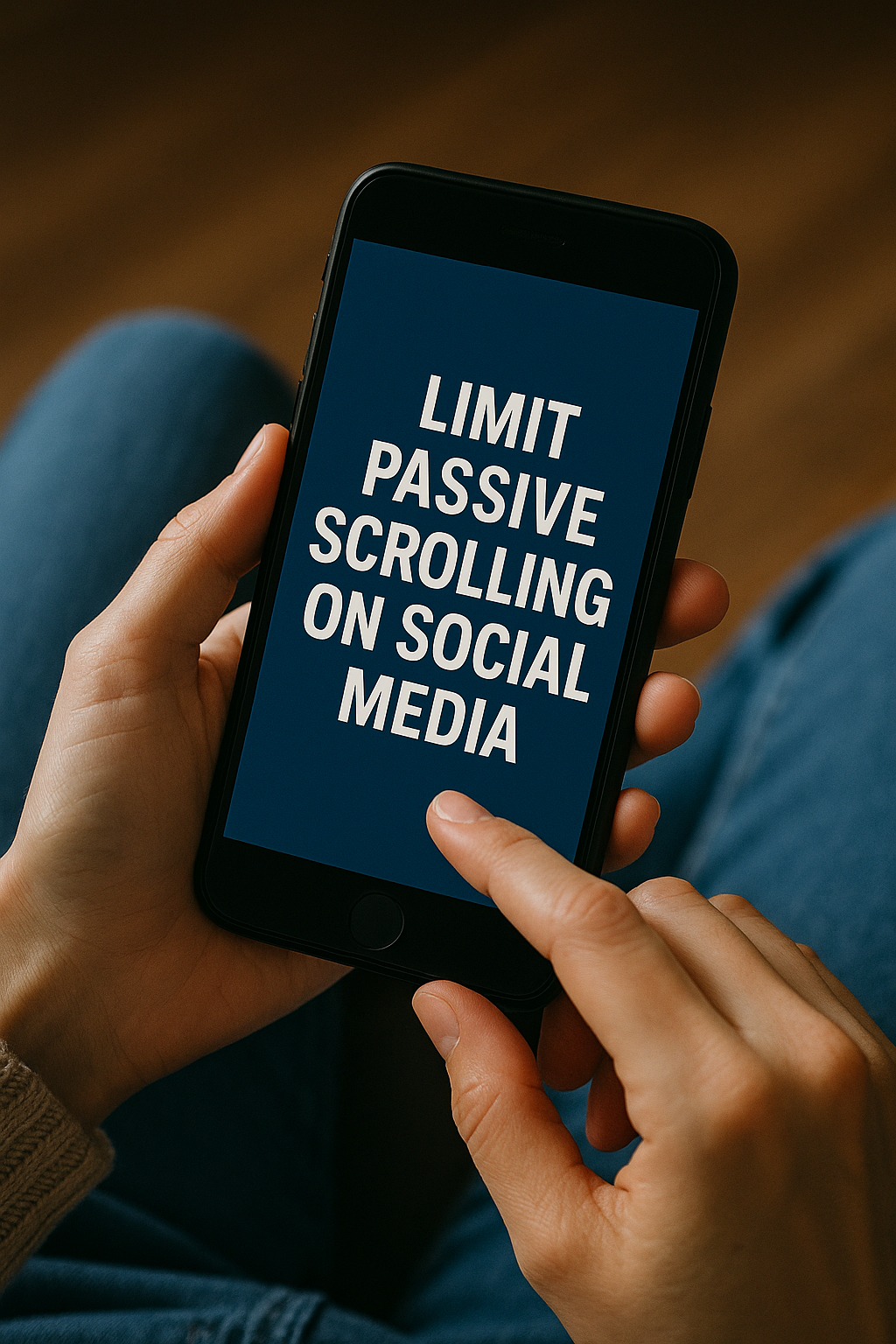
A reminder to limit passive scrolling on social media — a simple step toward improving focus, mental health, and digital well-being
3. Join real-life communities
Whether it’s a local class, a religious group, or a community cleanup, shared activity leads to shared bonds.
4. Volunteer — It helps you too
Helping others provides purpose, and creates meaningful interaction. From food banks to elderly care homes, opportunities abound.
5. Support the lonely
Notice signs of loneliness in others. A quick text, visit, or genuine conversation could be life-changing — for them and for you.
6. Seek help without shame
Mental health professionals are trained to help people through emotional challenges. Therapy isn’t only for crises — it’s a tool for growth and connection.
The role of technology: Friend or foe?
While social media often worsens loneliness, technology can also be part of the solution:
-
Online support groups
-
Apps for mental well-being (like Calm, Headspace)
-
Virtual meetups for people with shared interests
The key is to use technology intentionally — not as a replacement for human connection, but as a bridge toward it.
A message to the lonely: You are not alone
If you’re reading this and feeling unseen or unheard, know this — millions around the world feel what you feel. And more importantly, there’s a way forward. You are not a burden. Your story matters. There is help. There is healing. And most of all — there is hope.
A global problem, a human solution
Loneliness is more than just a sad feeling — it’s a global health concern.
But unlike many crises, its solution doesn’t require complex technology or billions in funding. It starts with a single act of human connection. A call. A smile. A walk. A shared meal. A moment of listening.
Remember it’s not always the old people who fall victim to Loneliness. Check all around you, it may be one of your friends, family members, relatives, neighbors or colleagues irrespective of age.
The antidote to loneliness is reaching out for each other.

Recently I wrote on the image that we see in the mirror is not the same as others see us. Isn’t it interesting and at the same time shocking too? The figure we are accustomed to and comfortable with is not the image we want others to see of us. If you want to see the true image you should look into A True Mirror. Go through the article which gives you an interesting read that upheaves your thought process.
You may also like to read my latest blog on Feeling left alone in the thick of digital well wishers https://miscverse.blogspot.com/2025/12/how-you-feel-left-out-alone-even-when.html