I understand that the bitterness one carries in mind affects him/her negatively in more than
one ways. It leaves an indelible mark on the psyche. Moreover the ember keeps burning deep
inside under several layers of made up masks of happiness. Resentment in effect is raising a
toast of poison to harm your enem(y)ies.
Since I realise the importance and gravity of the subject I have designed the blog in three
parts. Here is the first part.
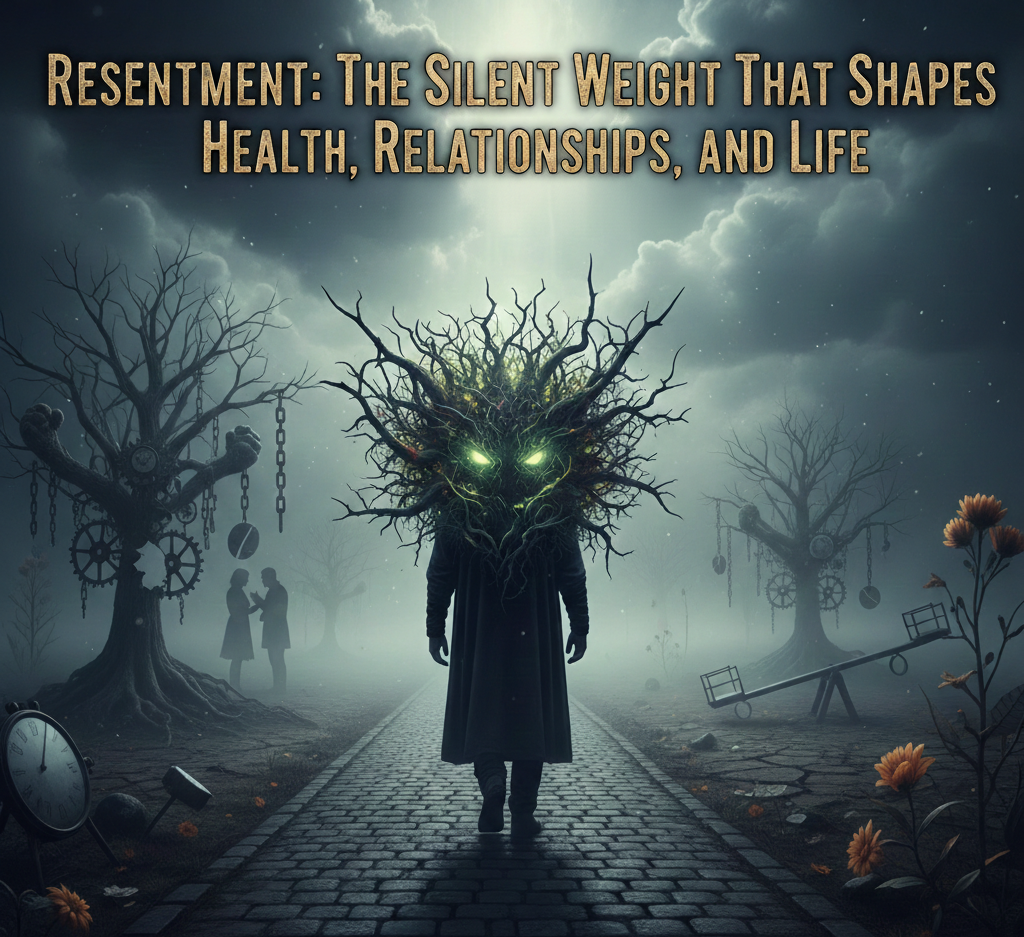
Resentment: The Silent Weight That Shapes Health, Relationships, and Life
Part 1 of 3
Resentment is not loud.
It does not arrive with chaos or drama.
It settles quietly, often disguised as strength, patience, or adjustment.
And yet, over time, it becomes one of the most corrosive emotional states a human being can
carry.
This is a complete, grounded, and relatable exploration of resentment—what it is, how it
forms, why it persists, how it damages health and life, and most importantly, how it can be
released without denial, guilt, or forced positivity.
1. What is Resentment?
Resentment is unexpressed emotional pain that has been repeatedly ignored or suppressed.
It is not just anger.
It is anger plus memory plus powerlessness.
At its core, resentment says:
“Something was unfair,
I felt hurt,
I didn’t feel safe or allowed to express it,
and now I carry it inside.”
Unlike anger, which is momentary and reactive, resentment is stored emotion.
It becomes part of a person’s internal landscape.
Key characteristics of resentment
Lingering bitterness
Replaying past events
Emotional withdrawal
Passive resistance
Loss of warmth toward people or life
A sense of “I gave more than I received”
Resentment does not explode.
It erodes.
2. How Resentment Forms
Resentment forms not because we feel pain, but because we deny ourselves permission to
respond to pain honestly.
The common formation cycle
1. Expectation
Love, fairness, respect, acknowledgment, safety
2. Violation
Neglect, betrayal, disrespect, imbalance, humiliation
3. Silence
“Let it go”
“Don’t create drama”
“Be the bigger person”
4. Repetition
The same boundary is crossed again
5. Internalization
Anger turns inward
Self-blame begins
6. Resentment
The wound stays open
Memory keeps it alive
Why people don’t express hurt
Fear of conflict
Emotional conditioning (especially in families)
Cultural pressure to endure
Financial or emotional dependence
Belief that silence equals maturity
Trauma history
Resentment is not weakness.
It is pain that never found a voice.
3. Reasons Resentment Persists
Resentment survives because it serves a psychological function, even if it harms us.
1. It preserves dignity when expression felt unsafe
Silence felt safer than confrontation.
2. It keeps memory alive as protection
The mind believes remembering pain prevents repetition.
3. It substitutes boundaries
When boundaries weren’t set externally, resentment becomes an internal wall.
4. It provides moral positioning
“I suffered, therefore I am right” becomes an identity.
5. It becomes familiar
People can become more attached to resentment than to uncertainty.
Letting go of resentment often feels like:
Betraying one’s past pain
Invalidating one’s suffering
Losing a part of identity
4. Symptoms of Resentment
Resentment affects mind, body, behavior, and relationships.
Emotional symptoms
Irritability without clear cause
Emotional numbness
Reduced joy
Cynicism
Passive aggression
Chronic dissatisfaction
Mental symptoms
Overthinking conversations
Imagined arguments
Difficulty trusting
Negative interpretation bias
Mental fatigue
Physical symptoms
Chronic headaches
Digestive issues
Neck and shoulder tension
Fatigue
Insomnia
Weakened immunity
Blood pressure issues
The body often expresses what the mouth never did.
Relational symptoms
Emotional withdrawal
Loss of intimacy
Reduced empathy
Increased criticism
Feeling “used” or “unseen”
Resentment doesn’t stay where it was born.
It spreads.
5. Impact on Health and Life
On physical health
Long-term resentment keeps the nervous system in a low-grade fight-or-flight state.
This leads to:
Elevated cortisol
Chronic inflammation
Hormonal imbalance
Reduced cellular repair
Accelerated aging
Resentment is stress that never rests.
On mental health
Anxiety disorders
Depression
Burnout
Emotional detachment
Identity confusion
On decision-making
Resentment:
Distorts perception
Creates defensive choices
Blocks creativity
Limits risk-taking
Narrows life possibilities
On life satisfaction
Many people don’t hate their lives.
They resent how much they had to swallow to survive them.
6. Domestic Roots of Resentment
Common household sources
Unequal emotional labor
Being the “responsible one”
Emotional neglect by parents
Favoritism among siblings
Silent sacrifices
Being unheard in conflict
Cultural reinforcement
In many homes:
Endurance is praised
Expression is punished
Obedience is valued over honesty
Children learn early:
“Love requires silence.”
That lesson becomes adult resentment. I regard this as the most important one.
7. Professional Roots of Resentment
Common professional triggers
Overworking without recognition
Unclear boundaries
Exploitation masked as “opportunity” (how management manipulates you)
Being overlooked
Emotional invalidation by authority
Job insecurity
Why resentment grows at work
Power imbalance
Financial dependency
Fear of retaliation
Identity tied to performance
Professional resentment often turns into:
Quiet quitting
Loss of motivation
Chronic dissatisfaction
Emotional detachment from purpose
8. Remedies: Domestic and Professional
Domestic remedies
1. Name the resentment privately
Write exactly what hurt
Without moral judgment
2. Differentiate pain from blame
Pain is real
Blame freezes healing
3. Express without accusation
Use “I felt”
Not “You always”
4. Set boundaries retroactively
Even if behavior doesn’t change
Your response can
5. Release unrealistic expectations
Some people cannot give what they never learned
Professional remedies
1. Clarify role boundaries
2. Stop over-functioning
3. Detach self-worth from output
4. Document contributions
5. Plan exit strategies
Resentment often signals misalignment
Resentment is information.
It tells you where self-respect was compromised.
9. Overcoming Resentment (Without Bypassing)
Overcoming resentment does not mean:
Forgiving prematurely
Forgetting harm
Minimizing pain
Spiritual bypassing
True release follows stages.
Stage 1: Validation
“What I felt made sense.”
Stage 2: Ownership
“I did not protect myself.”
Stage 3: Responsibility
“I choose how long I carry this.”
Stage 4: Boundary restoration
“I act differently now.”
Stage 5: Emotional integration
“The pain no longer controls me.”
Forgiveness, if it comes, is a byproduct—not a demand.
10. Daily Healthy Regimen to Prevent Resentment
Morning (10–15 minutes)
3 minutes of slow breathing
Ask: “What emotion do I feel right now?”
No fixing—only noticing
Midday
Body check: shoulders, jaw, breath
Release tension consciously
One honest boundary (even small)
Evening
Write one resentment that surfaced
Ask:
Was it old or new?
Did I express or suppress?
Weekly
One difficult conversation or decision
One act of self-honoring discomfort
Lifestyle practices
Reduce people-pleasing
Sleep before exhaustion
Move the body daily
Limit emotional over-giving
Health is not just what you eat.
It is what you no longer swallow.
11. Additional Insights Most People Miss
Resentment often masks grief
Grief for:
Who you had to become
What you didn’t receive
The self you silenced
Resentment thrives in “good people”
Especially those who:
Are empathetic
Avoid conflict
Value harmony
Were praised for endurance
Letting go doesn’t rewrite history
It rewrites the future.
Some resentment dissolves only with distance
Not every wound heals in proximity.
Final Reflection
Resentment is not a moral failure.
It is a human response to unacknowledged pain.
But carrying it indefinitely costs:
Health
Joy
Connection
Clarity
Freedom
Healing resentment is not about becoming softer toward others.
It is about becoming honest with yourself.
And honesty, when practiced gently and consistently, restores the body, the mind, and life
itself.
Subsequent release of other parts
Feb 3, 2026 – Part 2 of 3 Resentment Detox – Case Studies and A 7 Day Detox
Plan
Feb 5, 2026 -Part 3 of 3 : Separate Guides for “victims” both at home and at work
place