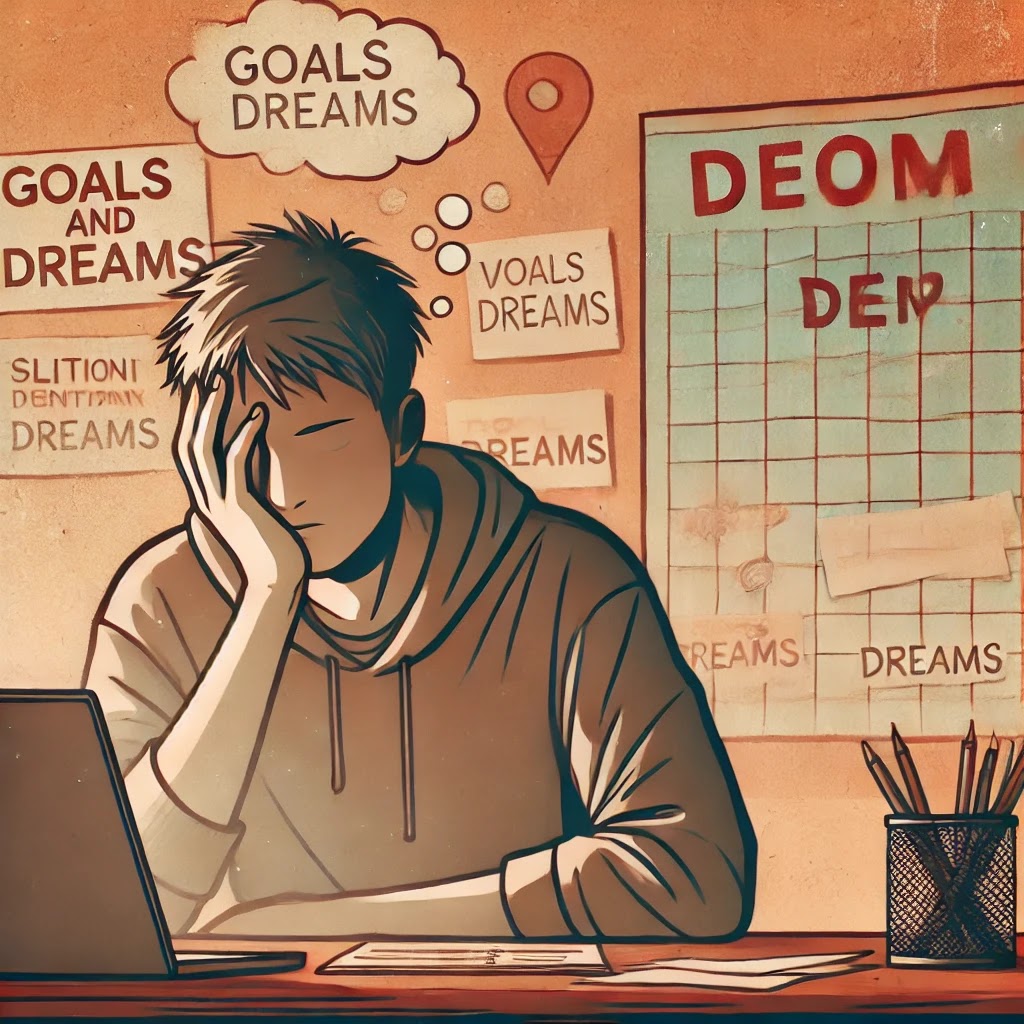
I have intended to do this in a series of four parts and the details are as follows.
Series Title: The Lost Compass: Helping Young Minds Find Their Direction
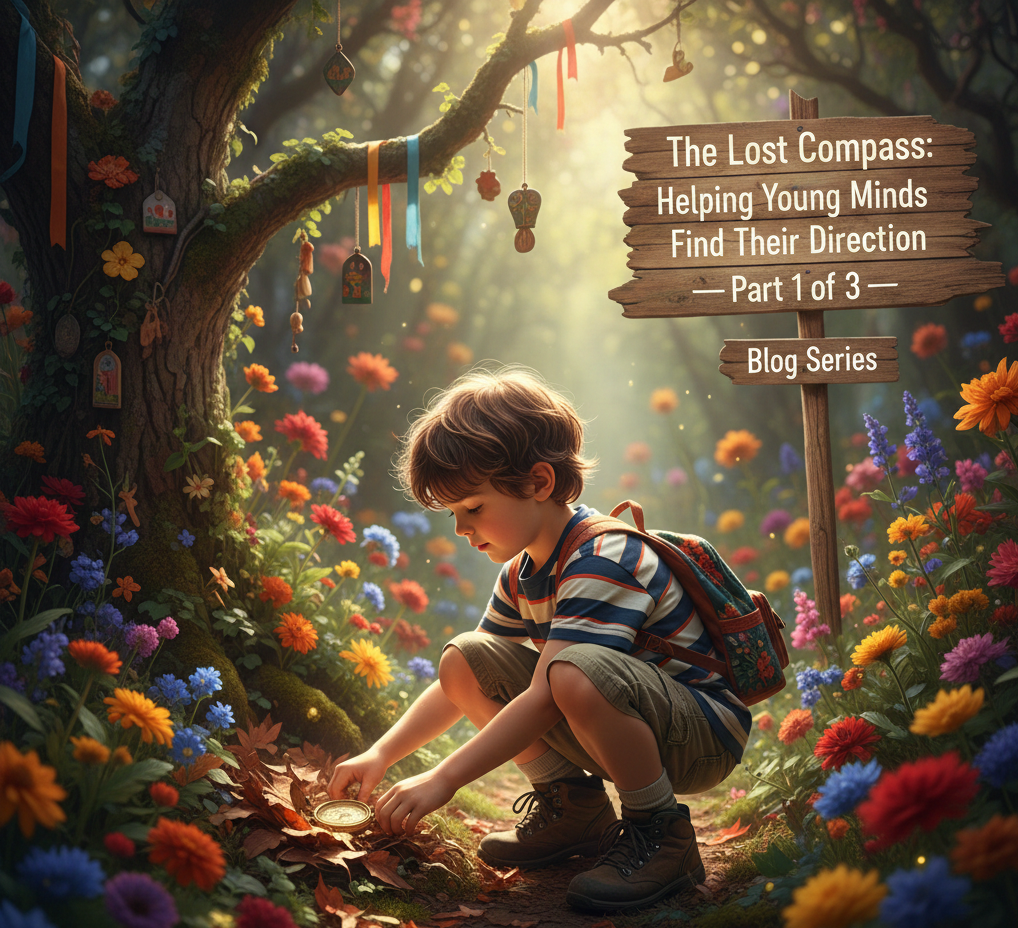
Part 1: When Goals Don’t Exist — Why So Many Young Minds Drift Without Direction
Focus: Why goal-setting feels foreign or forced to many youngsters today.
Part 2: Discovering Your Strengths — The Hidden Map Within
Focus: How to identify one’s natural strengths and tendencies.
Part 3: From Spark to Fire — Finding and Nurturing Passion
Focus: How to move from curiosity → interest → purpose → passion.
When Goals Don’t Exist — Why So Many Young Minds Drift Without Direction
Part 1 of 3

There’s a strange irony in today’s generation:
They have more information than any generation before them — yet less clarity about
what they truly want.
Ask a young person, “What’s your goal?”, and you’ll often meet one of three reactions:
A confused pause.
A rehearsed, generic answer (“I want to be successful”).
Or an honest shrug: “I don’t know.”
This isn’t a sign of laziness. It’s a reflection of a generation overstimulated, yet under-
guided.
1. The Age of Infinite Options — and Infinite Confusion
In earlier decades, choices were limited. Careers followed clearer lines: teacher,
engineer,
doctor, lawyer.
Today, there’s an explosion of possibilities — influencer, gamer, AI designer,
sustainability consultant, or even “content strategist for virtual worlds.”
Ironically, abundance creates paralysis. Psychologists call this the Paradox of Choice —
when too many options lead to confusion, anxiety, and indecision.
Youngsters aren’t lacking in ambition; they’re drowning in possibilities without clarity.
2. The Social Media Mirage
Social media glorifies outcomes, not processes.
A 19-year-old sees a 21-year-old millionaire online and feels instantly inadequate.
Every scroll becomes a subconscious comparison —
not with who they are, but who they think they should be.
Thus begins a cycle of impostor pressure:
“If I don’t have it all figured out by 22, I’m already behind.”
This illusion makes goal-setting feel intimidating rather than inspiring.
3. The Problem with Traditional Goal Advice
The classic formula — “Set SMART goals (Specific, Measurable, Achievable, Realistic,
Time-bound)” — sounds neat on paper.
But for someone who hasn’t yet discovered what excites them, it’s like asking a
blindfolded person to draw a map.
We expect young minds to define goals before they’ve even had the chance to explore.
They’re told to “know their purpose” before they’ve met enough experiences to reveal it.
Instead of pushing them toward forced clarity, what they need first is guided curiosity.
4. When Goals Are Borrowed, Not Built
Many young people unknowingly adopt borrowed goals —
dreams implanted by parents, peers, or society.
A student who loves sketching may study engineering because “it’s secure.”
A naturally empathetic listener may suppress the desire for psychology or social work
because “it doesn’t pay enough.”
These misaligned goals breed silent dissatisfaction.
You may succeed externally — and yet feel strangely unfulfilled.
The first step, therefore, isn’t goal-setting.
It’s goal-unlearning — letting go of what’s not truly yours.
5. The Cost of Drifting
When you don’t have direction, the world gives you one.
The system pulls you into the next default: degree, job, paycheck, survival.
Without intentional goals, life becomes reactionary.
You work for deadlines, not for dreams.
Drifting seems harmless at first, but over time it erodes self-esteem.
You begin to doubt your abilities simply because you never applied them in the right
context.
“A ship without a compass isn’t lost because it’s broken — it’s lost because it’s never
steered.”
6. Why Most Goal-Setting Workshops Fail
Schools and colleges often conduct “career guidance” programs.
But most are mechanical: aptitude tests, personality charts, and motivational lectures.
What’s missing is personal context.
You can’t discover a goal in a one-hour seminar.
You need reflection, exposure, and mentorship — the three missing ingredients in most
educational systems.
7. Guiding Young Minds — Where to Begin
Helping youngsters set goals isn’t about giving them answers.
It’s about teaching them to ask better questions:
What energizes me, even when I’m tired?
What do I lose track of time doing?
What makes me curious, even if I’m not “good” at it yet?
What kind of problems do I naturally want to solve?
When they start answering these questions honestly, clarity emerges organically.
8. The Role of Parents and Teachers
Adults often try to direct rather than discover with youngsters.
Instead of telling them what to do, they must help them see who they are.
Some practical ways:
Exposure over enforcement: Let them try internships, volunteering, creative projects.
Conversations over commands: Ask open-ended questions instead of imposing careers.
Observation over opinion: Notice what lights them up when no one’s watching.
A 16-year-old might not know their “five-year goal,”
but if they can say, “I love creating new ideas,” — that’s a start.
9. The Emotional Core of Goallessness
Beneath goal confusion often lies fear — fear of failure, judgment, or disappointing
others.
Many youngsters would rather appear indifferent than admit they’re scared.
This emotional undercurrent must be addressed before ambition can surface.
That’s why mentors and parents need psychological sensitivity, not just academic advice.
Encouragement like “It’s okay not to know yet — let’s explore together”
is far more powerful than “You must decide soon.
10. Micro Goals: The Modern Mind’s Starting Point
Instead of asking, “What’s your life goal?”
ask, “What’s your next meaningful step?”
Micro goals — short, flexible, experimental — build clarity through action.
Examples:
“I’ll start a small YouTube channel for 3 months.”
“I’ll shadow a graphic designer for 2 weeks.”
“I’ll attend a coding bootcamp and see if I enjoy it.”
Each experiment gives feedback. Feedback builds self-knowledge.
Self-knowledge shapes real goals.
11. The Role of Reflection
Clarity doesn’t come from thinking alone — it comes from structured reflection.
Encourage journaling, self-assessment tools, and monthly “review days” where
youngsters
write:
What did I enjoy most this month?
What drained me?
What am I curious to try next?
Over time, patterns emerge. Those patterns point to purpose.
12. Case Study: Aarav’s Journey from Drifting to Driven
Aarav, 19, was a typical college student — bright, bored, and perpetually confused.
He studied commerce because “it’s safe,” though his real interest was in visual design.
After joining a goal-discovery program, he tried three 30-day experiments:
1. Volunteered to make posters for an NGO.
2. Interned briefly with a start-up’s marketing team.
3. Tried his hand at basic digital illustration
By the third month, his energy levels changed. He wasn’t escaping work anymore — he
was immersed.
That clarity didn’t come from a “test.”
It came from doing, reflecting, and adjusting.
Today, Aarav runs a small design studio — and says his real breakthrough was
“permission to explore.”
13. What Schools and Societies Must Relearn
Education must shift from output-driven to insight-driven.
Rather than only measuring grades, schools must nurture goal literacy — the skill of
setting, revising, and pursuing meaningful aims.
Goal education should include:
Emotional intelligence training
Exposure to real-world work
Mentorship programs
Reflective writing exercises
The goal is not to produce robots who know their path at 18 —
but humans who know how to find it when lost.
14. A Message to Young Readers
If you don’t have your goal figured out — breathe.
You’re not behind; you’re simply becoming.
Life isn’t a race to clarity; it’s a journey through curiosity.
Set smaller steps, explore widely, reflect deeply, and let experience sculpt your purpose.
Your path will reveal itself — not as a thunderbolt, but as a series of quiet realizations.
15. Closing Thought
“You don’t find your goal by sitting still — you find it by walking long enough to see what
stays with you.”
The journey to direction begins not with a plan, but with permission —
permission to explore, to fail, to change your mind, and to grow.
Next in Series:
Part 2 — “Discovering Your Strengths: The Hidden Map Within”
(How to identify and develop strengths that shape life goals)
The Lost Compass : The Trilogy
1. Part 1 — When Goals Don’t Exist: Why young people drift without direction and how
to begin discovering purpose
https://kvshan.com/2025/10/series-title-lost-compass-helping-young.html
2. Part 2 — Discovering Strengths: How to identify innate abilities and align them with
meaningful goals.
https://kvshan.com/2025/11/rt-2-discovering-your-strengths-hidden.html
3. Part 3 — From Spark to Fire: How to evolve curiosity into lasting passion and purpose.
https://kvshan.com/2026/01/from-spark-to-fire-finding-and.html
While waiting for the second part you may like to surf through this post dedicated to the
young and old alike,
https://kvshan.com/2025/12/you-are-what-you-think-how-thoughts.html
You may go through the latest post in MiscVerse where a lot of topics go under grind. Just
rake in through the site miscverse.blogspot.com.
Read the popular post which went viral as soon
as it was posted https://miscverse.blogspot.com/2025/12/the-new-rich-new.html
Read more on topics given under: